Some images of Saigon

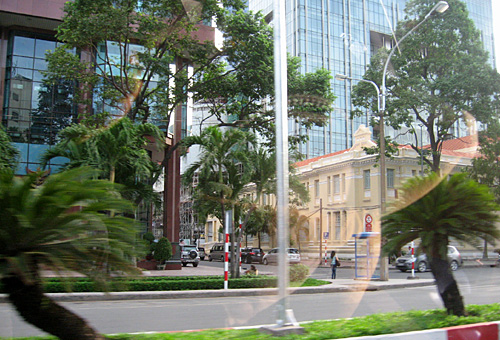
Saigon is the largest city in Vietnam by population. Under the name Saigon, it was the capital of the French colony of Cochinchina and later of the independent republic of South Vietnam 1955 – 75. On 2 July 1976, Saigon merged with the surrounding Gia Dinh Province.
Around 1.5 million motorbikes enter Ho Chi Minh City every day. The city has around 25 motorbikes for every car.
It has more than 80 universities and colleges.
Notre-Dame Cathedral Basilica of Saigon, officially Cathedral Basilica of Our Lady of The Immaculate Conception, is a cathedral located in the downtown of Saigon (Ho Chi Minh City), Vietnam. Established by French colonists who initially named it Cathédrale Notre-Dame de Saigon, the cathedral was constructed between 1863 and 1880. It has two bell towers, reaching a height of 58 meters (190 feet). All building materials were imported from France. The outside wall of the cathedral was built with bricks from Toulouse. Although the contractor did not use coated concrete, these bricks have retained their bright red color until today.
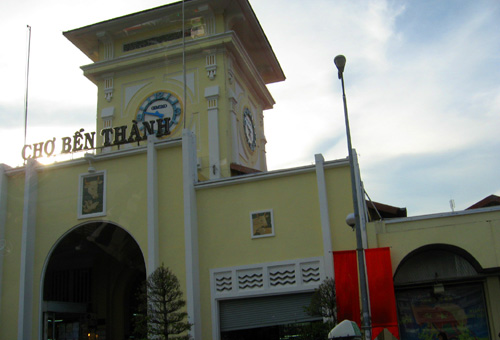
Bến Thành Market is a large marketplace in central Saigon, Vietnam in District 1.
The market is one of the earliest surviving structures in Saigon and an important symbol of Saigon City, popular with tourists seeking local handicrafts, textiles, áo dài and souvenirs, as well as local cuisine.
The market developed from informal markets created by early 17th century street vendors gathering together near the Saigon River. The market was formally established by the French colonial powers after taking over the Gia Dinh citadel in 1859 (see Citadel of Saigon). This market was destroyed by fire in 1870 and rebuilt to become Saigon's largest market. In 1912 the market was moved to a new building and called the New Bên Thành Market to distinguish over its predecessor. The building was renovated in 1985.
Phạm Ngũ Lão Street is located in District 1 of Saigon City. It was named after Pham Ngű Lão, the national hero. The intersection of Pham Ngű Lão and Đề Thám streets are referred to as the backpacker district of Saigon. This area is frequented by Ho Chi Minh city locals and tourist who flock to the area markets (both open air and indoors) to buy cheap clothes (some of which are counterfeit), DVDs, souvenirs, and war memorabilia.
The many bars and cafes in this district are conveniently located near Saigon's city centre. In the Vietnamese language, this area is called "khu Tay ba lo" (Backpacker's area). The Phạm Ngű Lão area is known for its affordable guest houses and mini-hotels as well as the availability of tourist agencies which primarily cater to budget tourists,